
This is the third in a series on the book of Ruth. The two big things for me from the book as a whole are:
- God’s plan for the universe is implemented in the little details. In the lives of seemingly ordinary people who share his characteristic of loyal love of hesed
- And God works in our lives – not always in obvious big flashy ways. Ruth never saw the true outcome of her faith the birth of Jesus. God will work in our lives to advance his purpose, even if we can’t see it yet.
In Chapter 1 we journeyed the bitter road home with Naomi and Ruth. We explored:
- How Naomi modelled giving people a gracious choice to come or go
- How Ruth continued being with and being for Naomi – even when she wasn’t be recognised or appreciated
- And finally we saw how God commences the process of redemption long before we even realise it
Above all I think we saw Ruth embody a giving, sacrificial love as she chose the God of Israel even though it appeared he was against Naomi and therefore against Ruth.
Back to Bethlehem
Having exited Moab the rest of the story will take place in Bethlehem – a place that survived the exile, waves of foreign invaders. Bethlehem endured. A town at the margins… from where God’s grace would move forward through the birth firstly David and eventually Jesus
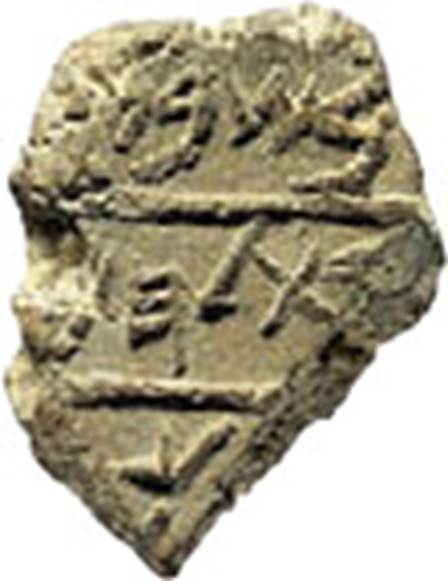
The picture here is a clay bulla – a round stamp – dating back 2,700 years to around the time of Josiah (or maybe Manasseh). Like a gazillion stamps of the period it reads – in the seventh (year) Beit Lehem For the king. It seems there was a tremendous stockpiling of supplies in various towns around Jerusalem in the time of Josiah and Manasseh as they awaited the northern invaders coming again. This clay bulla is the first non-biblical mention of Bethlehem.[1]
The script in case you are wondering is paleo Hebrew. Basically this is what Hebrew looked like until around the 3rd century BC when the square looking script we tend to think of came into use.
Anyway enough on the location – back to the story.
Character development in Act 2 of Ruth
We are into chapter 2 which forms the second act of the book. It is a masterful piece of storytelling and an incredible demonstration of what God is looking for in his people. And we are going to see a few key points:
- Boaz will shine as the perfect Torah informed Israelite. A man who went beyond obligation to love. Boaz shows God’s people don’t ask what do I have to do but rather what can I do.
- Naomi will start to thaw. She renamed herself Mara but is never called that, instead in Chapter 2 she gets the first inkling of hope again. She is a powerless poor old woman but will play her part perceiving the quiet hand of God. She will go from seeing God as cursing her in ch 1 to blessing Boaz in the name of God. Sometimes life and or age can rob us of the ability to contribute – except it hasn’t and the wisdom and perception of Naomi plays a role in the chapter as she herself begins to see God again and though somewhat helpless she can encourage others
- Ruth demonstrates faithful persistence. I’m somewhat reminded of Rom 2:7-11 where those who preserve in good works will be rewarded, glory honour and peace will come to everyone who does good says Paul, to the Jew first and the Gentile for there is no partiality with God (Rom 7:10-11). And this chapter will drive home the point that we need to keep going. To keep going. We might think we see God’s hand in our lives and think the end is near, but we have to keep going because sometimes, things don’t go the way we expect..
The Mysterious mighty man of Bethlehem
Ruth 2:1 builds us up for a little suspense with the introduction of a potential solution to Naomi’s problem:
Now Naomi had a relative on her husband’s side of the family named Boaz. He was a wealthy, prominent man from the clan of Elimelech Ruth 1:1
The meaning of his name is obscure. The name is attested as an early name in Cana but as to its meaning we just don’t know[2] and the story will cope fine if we declare our ignorance and move along. The Idea that it means strength is based on the LXX and Rabbinic sources but it not certain.[3]
Boaz now enters the story but his role is uncertain. He is a relative of Elimelech’s. But we are not told that he is the goel/the kinsman redeemer. His exact relationship with Naomi is obscure. All we know is that Boaz is a wealthy man or man of worth. A great man who is part of the wider family network.
The intention of the narrator is to build our interest and expect to see the solution here. For now Boaz is a mystery man but the hearers are drawn into the storyline – our expectations are aroused – something is happening and we wait to see how Boaz finds a place in the solution to Naomi’s tragedy.
The opening scene – preparing to glean Ruth 2:2-3
Having prepped the listeners with an expectation of good things to come, the story returns to the two women.
Ruth suggests she goes gleaning. Note the grammar – according to the Word Biblical Commentary – Ruth is very much asking permission, and demonstrates she is in subjection to Naomi[4]. In chapter 1 we saw Naomi demonstrate initiative and now Ruth will – continuing the rare female centric aspect of this book. Ruth is looking to find a way to provide in their poverty and volunteers to work for the benefit of both the widows.
Well wouldn’t you know it. Ruth – completely unawares – just so happened to end up in the field of Boaz. Note that commentators criticise the usual English translation as far too understated. The Hebrew is something like “her chance chanced upon”. [5] There’s a repetition and emphasis here to bring our attention to it.
The narrator is telling us that this was no fluke. While Ruth made no decision and had no plan God did. Biblical characters saw God’s hand in everyday life – including in things we consider to be just the natural laws of God’s creation rather than his specific activity. Did blind chance take Ruth to Boaz’s field? The hearers of the story would answer an emphatic “no way, this is God’s hand” and so the rest of the story bears this out.
God works unseen in our lives but how and to what end may not be obvious…and we will see in this chapter that rushing to see God’s hand might sometimes be a mistake – or at least create disappointment.
Let’s be clear on what gleaning was using the following depiction from the Egyptian records:

Harvesting in the time of Ruth was different to today. Firstly barley and wheat grew taller. Farmers today favour dwarf varieties which don’t waste nutrients growing high. Back then though reapers cut wheat and most other grains a few inches below the head rather than near ground level. This process facilitated the separate harvest of the stalks, which were then used as bedding and fodder and as a binder for mud bricks. The sheaves consisted of multiple bundles of cut grain tied together.[6]
Boaz’s field had workers who essentially would be doing the same process using similar bronze sickles albeit it seems in the field of Boaz per Ruth 2:9 women workers did the work of bundling[7]
The Mosaic Law code has some striking similarities with the law codes of surrounding nations. But there are some significant and striking dissimilarities as well[8]. And it frequently the unique aspects of a thing which are the most important. Some of the key differences in the Mosaic Law is that it does not accord different strata of society different legal rights. To have the king and commoner subject to the same rules and punishment is very unusual.
[Please note I’m not pretending all the Mosaic Law is great – some of the regulations around women and slaves can be better or worse than surrounding law codes and certainly does reach the level we would hope to see].
The Torah does reach well beyond the surrounding codes in some areas it was particularly distinct in its overt focus on providing for and protecting the vulnerable. The law of Moses embedded legal protections for these groups. Widows orphans and strangers were given specific protections, oppressing them would bring judgement Exod 22:22–24, Deut 24:17 but caring for them would bring blessings Deut 10:18. These were not outstanding examples of rare virtue by a king but a base line every day expection as part of God‘s covenant with His people.
While Mesopotamian laws protected the property rights of widows (inheritance laws) and you would see the occasionally royal decrees mandating debt relief or land restoration, this was intermittent and top down. There was nothing like the gleaning rights or systemic embedded provision of food for the poor as an obligation for all landowners.[9]
While I wish the Law went further on slavery and gender, these sorts of differences do demonstrate how God was pushing his people to a fairer more equitable society where justice and compassion formed part of society at the micro as well as national level.
So what are some of these unique provisions?
- Farmers had to leave the corner of the fields unharvested and not double back over the crop – this was left for orphans, widows and resident foreigners Lev 19:9–10; 23:22; Deut 24:19–21.
- At the feast of weeks the poor were specifically to be included and provided for Deut 16:11
- These groups were given privileges partaking of the tithes every third year Deut 14:29; and full access to everything that grew in the sabbath year Exod 23:10-11
Poverty relief was built into the economic and legal structures of Israel[10]. Landowners had to ensure there was something there to be gleaned.
In the OT God commanded care for the vulnerable and his prophets reinforced the message. As Isaiah 1:17 commands:
Learn to do what is right! Promote justice! Give the oppressed reason to celebrate! Take up the cause of the orphan! Defend the rights of the widow!
God identifies himself as the one who steps into the breach of broken missing families and who is a father, an advocate, and the one who stands with the vulnerable.
He is a father to the fatherless and an advocate for widows” Psalm 68:5
Why? Because this is who God is. God is love. God cares for the vulnerable. And he wants his family to do the same.
However it doesn’t always work that way as Ruth would find out when she encountered Boaz’s steward.
The entrance of Boaz Ruth 2:4-7
When Boaz comes to his field in v4 everything is fantastic. The good man greets his workers with the name of God and they respond with a blessing in return. This is idyllic kingdom scenes – God’s people operating as you would hope. But. Is it?
In v5 Boaz notices Ruth and asks his steward what the story is. In v6-7 he responds.
There is a tinge of racism in his first words in v6 – the Moabite widow from Moab. True it follows the pattern of Ch1:21 which speaks of Ruth this way but there the point is to highlight the strangeness of Ruth’s presence, her foreignness. The steward perhaps is signalling she doesn’t belong,
What exactly Ruth asked for causes some concern amongst translators and commentators – the overseer reports she asked to glean among the cut and bundled heads of grain as reflected in the NET rendering
She asked, ‘May I follow the harvesters and gather grain among the bundles?’ Ruth 2:7 NET
This was pushing the plastic and really ahead of what the law really provided. Deut 24:19 seems to indicate gleaners operated after the bundles had been moved out of the field (and in the corners of the field).
Commentators hence struggle wondering whether the Hebrew is corrupted as this is clearly overreach by Ruth. Hence it is sometimes rendered among the sheaves rather than among the bundles and oft disputed[11]. Or is she so bold? Two things point seem at odds with the overseer’s report:
- Ruth’s stated request to Naomi in Ruth 2:2 was to gather behind the reapers. That is way less assertive than the v7 wording and is consistent with law and custom. Even in talking to the steward she appears to be asking for something which was actually a right (which is consistent with her humble persona)[12]
- in v9 we have Boaz demonstrating what a generous and good man he is. Ruth is given a privileged position just behind Boaz’s female servants. So she would be first in when they cleared the bundles away. In response to Boaz’s words Ruth will fall to the ground in thanks and respect in Ruth 2:10. It seems a strange response if she had been asking for even more than this before or it was not somehow super generous by Boaz.
My tentative suggestion which I think fits the context is as follows (and yes is broadly in line with the Word Biblical Commentary, Anchor Yale Bible Commentary and particularly the latest NIVAC volume on Ruth). As Lawson Younger Jr notes in the NIVAC the assumption that the overseer presents a fair report about Ruth is likely incorrect[13]. Rather the overseer serves to contrast the goodness of Boaz just as the unnamed relative will in chapter 4.
The overseer basically slanders Ruth accusing her of being an arrogant pushy foreigner asking for outrageous privileges. He demonstrates the sort of prejudice which is unfortunately prevalent in some Christian circles.
The second half of v7 is a hot wet mess meaning any meaning should be disclaimed[14] or as Hubbard puts it:
The last words of v. 7 are the most obscure in the entire book, a fact which has provoked many proposals[15]
However the meaning of the passage as a whole doesn’t seem to suffer in any of the proposals espoused.
Boaz’s provisions of care Ruth 2:8-9
Boaz offers Ruth comprehensive help that really covered everything she needed
Certainty v8
By instructing Ruth to stay in his field Boaz is ensuring Ruth’s safety and right to glean will be honoured. She now knows she can continue to work in his field to the end of harvest. Ruth won’t be taking her chances going to a random field the next day. Note he basically says three times to stay in his field don’t leave and stay close to his women
Opportunity V8-9
As mentioned on the harvest process – the women servants would be collecting the cut heads and bundling them together. Ruth is given a permission, actually an instruction, to work right up behind the women. This means she is in prime position as a gleaner as she has first opportunity to collect anything that the women drop or miss.
Protection V9
Boaz tells his male servants to leave Ruth alone, this means not to touch her as the NET says in the footnotes. The JPS Bible Commentary notes that while there are a range of nuances to the Hebrew here the primary sense is to touch and usually in a sexual way[16]. Ruth was a young woman without a husband or any protection against any wicked man. Boaz – the righteous – makes pre-emptive arrangements to ensure the safety and comfort of Ruth.
Just a diversion here. I have been horrified over the last 10 years or so to hear flat our terrible stories within our own community (predominantly, but not exclusively, among more conservative congregations).
- Divorced and single women subject to harassment and unwanted attention. And that has be told to me by at least 5 different sisters across a wide range of ages ie it is not an isolated event or just one person’s imagination
- Sisters discussing between themselves which men are best avoided to dodge uncomfortable or dangerous situations
That such things occur is an inditement. Relying on the exceptional Boaz isn’t enough to systemically prevent such abuses. Ruth got lucky and had Boaz. Other women at the end of Judges did not. Including women within governance structures seems to me to be a fundamental step to change the power balance and pre-emptive protect all our family like Boaz did.
Provisions V9
Boaz does something remarkably generous and perhaps a little radical. He grants Ruth access to the water drawn by the male servants (as the Anchor Yale Commentary notes the verb is exclusively used of drawing water[17]). Normally the foreigners would be drawing water for the Israelites like the tricky Gibeonites in Josh 4:21! Boaz gives a Gentile widow access to the water drawn by Israelite men. There might even be a more radical sub plot here. The Moabites were prevented from joining the congregation of Israel for 10 years because they didn’t bring water to Israel in the wilderness wanderings according to Deut 23:4-5. Boaz is inverting history and the law by his generosity. And in due course Jesus will come into the world because of this attitude…
This is not just providing practical care for people that Boaz is modelling here. He is providing care to a Moabite – a people rejected by God because they refused to provide care. Boaz is a remarkably gracious man
A model of care
There is something here about how we care for others. Providing certainty for the long term, not just a quick bit of help then run. Opportunity for people to be part of their own rebuilding. Providing protection and security – pre-emptively ensuring people are safe as they try and rebuild and Provisions – generously enabling access to more than people are entitled to but will help them keep going.
Boaz demonstrates a spirit of true religion, of man who was driven by hesed/love not minimal compliance or worse selfishness. The prophets spoke against such failures by king and people eg Isa 1:23; 10:2; Ps 94:6, Jer 7:9. But Boaz provides for this poor widow, this member of the despicable Moabites.
Now lets’ get blunt. While the economics of migration are often challenging Christian attitudes should first be formed by the repeated theme of Old and New Testament in support of the vulnerable. And there are sections of the Christian community – frequently conservative evangelical types – who have adopted quite ungodly attitudes towards immigrants and the economically disadvantaged. God was never a free market economist – wealth distribution to help all the needy was baked into God’s national template[18].
Humans are incredibly good at justifying their hardness and minimising their obligations. As the lawyer said to Jesus – well who is my neighbour? In Boaz we see the template Israelite. Here is embodied the spirit of the law, the goodness of God. There is no questioning of how much is enough. Rather than the question is what else can I do!
We might ask ourselves what the application might be today?
We have awesome opportunities to help today. Initiatives like Agape in Action, the Vanuatu based Tafea Healthy Clinic on Tanna Island, the Christadelphian Refugee Association Committee, Meal a day. There are many opportunities to help financially if not directly….
When we have a Boaz sort of attitude God will work with us to do incredible things. What else can I do? That was the Boaz mindset.
Ruth’s Gratitude Ruth 2:10
In v10 Ruth falls to the ground in gratitude to Boaz. She recognized his graciousness and responds
Ruth demonstrates through the chapter a tremendous humility. She doesn’t assume her rights – despite the very clear repeated instructions in the law she asks the foreman for permission to glean in the field.
It’s a spirit we should show. Paul in the letter to Philemon doesn’t use his authority to command a course of action but rather asks as a favour Phil 1:8-9. Paul consistently chose to entreat wayward congregations behaving as he says in 1 Thes2:6-8 as a nursing mother rather exerting his authority as an apostle. It’s a model for all of us – whether in authority or not – to ask to have this spirit of constructive engagement rather than bang the table making demands of each other because we have (or think we have) the word of God on our side and are in the right. It’s not the model of loving faithfulness Ruth exhibited
V11-12 Boaz explains his rationale for the above and beyond blessings. Despite Ruth being socially way removed from him, a poor, a foreigner, a woman and a widow he recognized and commended her hesed – her lived faithfulness and love. This is all one in Christ type of thinking Gal 3:28 style – not regarding the barriers that society encourages us to use to value others.
As the NIVAC notes:
It is not in some religious setting that Ruth or Boaz manifest their hesed. Rather, it is in the daily workplace, the place where too often hesed is lacking. Such manifestations of hesed are the result of commitment to the Lord, and both Ruth and Boaz exhibit hesed qualities to those around them[19]
Radical Table fellowship and generosity Ruth 2:14-16
Boaz’s next action later in the day would have surprised everyone – including Ruth. She is invited to the table to set and eat. In a highly patriarchal society having the leader acknowledge a woman would have been shocking – even more so given Ruth is a Moabite widow – the lowest of the low! You can perhaps image there was than one report of the day’s strange events made that evening! I don’t think we see such open radical inclusion at the dining table again until we see Jesus.
Ruth is invited to dip her bread in the vinegar and Boaz offers her some parched grain. If like me you wondered what that is people speculate that it is something like freekeh – basically unripe wheat which has the chaff rubbed off and is then boiled or roasted[20]. You can buy it in health stores aisles. I cooked some to try it and it wasn’t overly appealing to a western palette – a bit like pearl barley but not as good.
The narrator wants us again to notice Ruth’s diligence and prudence. She saves some of the surplus food for later. This is the kind of wisdom that Prov 6:6-8 emphasis – using the ants storing food as an example of the kind of forethought and diligence Ruth displays.
In v15 and v16 Boaz goes from generous to outrageous. He tells the male worked to let Ruth get too close into the harvesting operation and more importantly tells them to deliberately drop handfuls of grain.
Ruth didn’t know Boaz had tilted the scales in her favour, just as she didn’t know God led her to Boaz’s field. God’s generosity was hidden just as Boaz’s kindness is similarly disguised. This is the Matthew 6:2-4 model of charity – not doing good deeds in a public way. It means providing material, meaningful help but in a way where the recipient doesn’t necessarily know the full extent of the loving kindness extended. Hesed means providing MORE than someone is entitled to but also preserving their dignity through the process of giving.
A remarkable gathering and reaction Ruth 2:17-22
Ruth gathered an ephah of barley grain AFTER threshing it out. According to Exod 16:22 & 26 an ephah of manna was around 10 days food (circa 10 litres or around 6kg of barley). However the volume of an ephah appears to move over time. By the 8th century it appears to have been around 22 litres. Also it maybe that manna was more nutritious than barley – I don’t know.
According to various pay scales we have, compliments of archaeology, in the Old Mesopotamian records Ruth gathered around 15 days’ worth of labourer wages in a single day[21]. Assuming she continued to gather at this rate through the two months of barley and wheat harvest, Ruth would have gathered around 8-12 months worth of food[22] – a phenomenal amount!
In Ruth 1:20-21 Naomi renamed herself Mara – bitterness – and declares God has cursed her. At the start of this chapter she is strangely passive – not leaving the house to work with Ruth. But in v18 when Naomi sees the amount of grain that Ruth has gathered she immediately knows something has happened. In v 19 she peppers Ruth with two questions and before Ruth can even answer Naomi the older woman pronounces a blessing on the mysterious benefactor that looked out for Ruth.
When Ruth explains in v19 then Naomi goes even further. She blesses Boaz in God’s name because of his hesed – his loving kindness. Note some translations suggest Naomi blesses Boaz and possibly God however this appears to be incorrect, Naomi only blesses Boaz in God’s name[23].
God is tremendously patient with his children. Naomi has suffered. While God has acted in her life, giving her Ruth, bringing harvests to Bethlehem and now leading Ruth to the field of Boaz Naomi isn’t ready to praise God yet.
In 2 Peter while emphasizing that God has a timeline Peter writes:
The Lord is not slow concerning his promise, as some regard slowness, but is being patient toward you, because he does not wish for any to perish but for all to come to repentance 2 Pet 3:9
God waits for people. We see that with Jesus working with his disciples, providing them so much exposure, so many signs and still they fail to grasp who he is and what that means fully. We are no different – but Jesus is also no different. God is patience – he understands when we need time.
And we need to show the same gentle patience to each other as Paul suggests in Galatians 6:
Brothers and sisters, if a person is discovered in some sin, you who are spiritual restore such a person in a spirit of gentleness. Pay close attention to yourselves, so that you are not tempted too. Carry one another’s burdens, and in this way you will fulfil the law of Christ Galatians 6:1-2
A spirit of gentleness of carrying other people’s burdens is what we are called to demonstrate. Its easy to skip over this quickly. Burdens are not easy to carry. They are uncomfortable, inconvenient and painful. They are heavy as the word means. Burdens might be unreasonable and have sharp edges. It might be long hard labour as the word is used in the labourers of the vineyard who bore the heat and burden of the day (Matt 20:12). So be it. Carry the burden of the wounded one says Paul – not because it’s easy, not because it’s fair but because Jesus carried our burden. Because God is patient with us whether we deserve it or not. The burden is unreasonable – especially given who we are carrying it for! But no that is not the spirit of hesed. That is not loving kindness – the kind that changes lives one burden at a time.
Ruth, and indirectly God, are demonstrating tremendous patience with Naomi and carrying the burden. Conversion, healing, call it what you will is not always an on the spot snap thing. Continual hesed. Loving kindness. That is what will gradually transform Naomi. The hesed of Ruth, the hesed of Boaz. It is our loving kindness, our gentleness, our carrying of each other’s burdens that can transform mara/bitterness back to Naomi/pleasantness. How long and how far? Who knows. But it is the only way.
True hesed endures Ruth 2:23
Ruth continues working for like two months through the beginning of barley harvest through to the end of the wheat harvest. As stated – this probably provided around 8-12 months worth of food for the two women. So she has worked through April and May gathering food.
However there is an issue here in the story.
Anticipation is a thing. When you go to hear an orchestra, you have to accept the fact they will tune up their instruments. This is part of getting ready, the big build up for a celebration of great music. The picture here is of the Berlin Philharmonic Orchestra. However the audience – having listened to the tune up and getting ready to be entertained in stead are treated to the 1952 John Cage composition 4’33 which is literally 4 minutes 33 of silence. Broken into 3 movements. The only noise is ambient sound. It was and remains somewhat controversial….
Ruth 2:23 is the narrator’s John Cage moment. The chapter has so much build up:
- Boaz’s intro
- The ‘lucky’ location
- Generous gleaning privileges
- Lunch time interaction
- Hidden favour
- Incredible amount of grain collected
And then silence
Ruth kept working. The day after she met Boaz she went back to work. And the day after. And again. And again. 2 months. 48 days (adjusting for Sabbaths) of back breaking work. And each day hope fading. What started with so much clear evidence of God’s hand was turning day by day into a long hard future of widowhood. Of subsistence living. Of hard work getting you at best just enough to make it through to another tough year.
Paul said we have to keep going:
“So we must not grow weary in doing good, for in due time we will reap, if we do not give up” Galatians 6:9
Scripture has plenty more to say on a similar vein about waiting patiently for God. Here’s a small sample of two more:
– Be still before God and wait patiently before him says Psa 37:7
– It is good to wait patiently for deliverance from the Lord Lamentations 3:26
Easy to say – hard to do. Especially if you are staring down the barrel of barely living like Ruth and Naomi. Even harder when you THOUGHT God was moving in your life. It’s like you got baptized because God was so obviously moving and world events were clearly pointing to Gods actions. And in your own life things were so obvious that God was calling you. Obviously the coming of Jesus was about to happen – all this activity and clear signs. But days turn to weeks and months and years. What!?! But God was obviously working in my life?! The signs were all there!? What happened?!?
Maybe he was. Maybe he wasn’t. Were we right to assume God led Ruth to Boaz’s field? Were we right to expect more from this godly man? Maybe the obvious hand of providence wasn’t doing what we wanted. In each case the answer is yes God’s hand was working – but his plan is not out plan and the timelines don’t always match.
We are waiting not for a solution to our problems today – these are after all just symptoms of our bigger need. We are waiting says 1 Cor 1:7 and plenty of other NT passages for the appearance of Jesus. That’s what God’s providence is building to. Sometimes we can get our hopes up. I’m sure Ruth and Naomi did. But nothing happened. And Ruth had to go back to the field and keep working. Day after long hard day, all the while her hopes fading as the remarkable events of her first day became only a memory.
All we can do is hesed—loving kindness. We can’t always see what God is doing. Sometimes He works quickly; often, He doesn’t. But we are called to faithfulness, not outcomes.
In the New Testament, we see this same call echoed. Paul writes in Romans 12:6–8 that we each have different gifts, and we are to use them according to the grace given to us. Peter urges believers to love one another deeply (1 Peter 4:8), and Paul tells the Galatians not to grow weary in doing good, “for at the proper time we will reap a harvest if we do not give up” (Galatians 6:9).
That is the spirit of hesed—steadfast love in action.
- For Boaz, hesed meant showing compassion and generous protection.
- For Ruth, it meant hard, humble labour.
- For Naomi, it meant finding the courage to hope again.
Though their hesed looked different, it was the same spirit at work. Patient, faithful love was quietly transforming their lives—and in partnership with God – transforming history. Their simple acts propel God’s plan forward to David, and ultimately to Christ. Because the kingdom of God does not always come in power and noise. Sometimes, it moves forward when a lowly but hesed filled Moabite widow bends to gather yet another handful of barley.
by Daniel Edgecombe
[1] Randall Price and H. Wayne House, Zondervan Handbook of Biblical Archaeology (Grand Rapids, MI: Zondervan, 2017), 114–115.
[2] Fredric W. Bush, Ruth, Esther, vol. 9, Word Biblical Commentary (Dallas: Word, Incorporated, 1996), 101
[3] Tamara Cohn Eskenazi and Tikva Frymer-Kensky, The JPS Bible Commentary: Ruth, First edition, JPS Tanakh Commentary (Philadelphia, PA: Jewish Publication Society, 2011), 28.
[4] Fredric W. Bush, Ruth, Esther, vol. 9, Word Biblical Commentary (Dallas: Word, Incorporated, 1996), 102.
[5] W. Gary Philips, Judges, Ruth, ed. Max Anders, vol. 5, Holman Old Testament Commentary (Nashville, TN: Holman Reference, 2004), 317.
[6] Logos Bible Software Media Collection “Gleaning”
[7] Fredric W. Bush, Ruth, Esther, vol. 9, Word Biblical Commentary (Dallas: Word, Incorporated, 1996), 121.
[8] Brian Johnson, “Law in the Hebrew Bible,” in The Lexham Bible Dictionary, ed. John D. Barry et al. (Bellingham, WA: Lexham Press, 2016) And for a more comprehensive treatment see John H. Walton and J. Harvey Walton, The Lost World of the Torah: Law as Covenant and Wisdom in Ancient Context (Downers Grove, IL: IVP Academic: An Imprint of InterVarsity Press, 2019)]
[9] See – Martha Roth, Law Collections from Mesopotamia and Asia Minor, 2nd ed. (SBL, 1997); Raymond Westbrook, History of Ancient Near Eastern Law
[10] Christopher J. H. Wright, in New Bible Commentary: 21st Century Edition, ed. D. A. Carson et al., 4th ed. (Leicester, England; Downers Grove, IL: Inter-Varsity Press, 1994), 147.
[11] Fredric W. Bush, Ruth, Esther, vol. 9, Word Biblical Commentary (Dallas: Word, Incorporated, 1996), 114.
[12] D. Ulrich, “Ruth 4: Person,” in Dictionary of the Old Testament: Wisdom, Poetry & Writings, ed. Tremper Longman III and Peter Enns (Downers Grove, IL; Nottingham, England: IVP Academic; Inter-Varsity Press, 2008), 702
[13] K. Lawson Younger Jr., Judges, Ruth, ed. Terry Muck, Revised Edition, The NIV Application Commentary (Grand Rapids, MI: Zondervan Academic, 2020), 555.
[14] Jr. Campbell Edward F., Ruth: A New Translation with Introduction, Notes, and Commentary, vol. 7, Anchor Yale Bible (New Haven; London: Yale University Press, 2008), 96.
[15] Robert L. Hubbard, The Book of Ruth, The New International Commentary on the Old Testament (Grand Rapids, MI: Wm. B. Eerdmans Publishing Co., 1988), 150.
[16] Tamara Cohn Eskenazi and Tikva Frymer-Kensky, The JPS Bible Commentary: Ruth, First edition, JPS Tanakh Commentary (Philadelphia, PA: Jewish Publication Society, 2011), 35
[17] Jr. Campbell Edward F., Ruth: A New Translation with Introduction, Notes, and Commentary, vol. 7, Anchor Yale Bible (New Haven; London: Yale University Press, 2008), 98
[18] David J. Downs, “Economics, Taxes, and Tithes,” in The World of the New Testament: Cultural, Social, and Historical Contexts, ed. Joel B. Green and Lee Martin McDonald (Grand Rapids, MI: Baker Academic, 2013), 162.
[19] Christopher A. Beetham and Nancy L. Erickson, eds., The NIV Application Commentary on the Bible, One-Volume Edition, NIV Application Commentary (Grand Rapids, MI: Zondervan Academic, 2024), 222.
[20] John Hutton Balfour, The Plants of the Bible (London; Edinburgh; New York: T. Nelson and Sons, 1885), 208.
[21] Robert L. Hubbard, The Book of Ruth, The New International Commentary on the Old Testament (Grand Rapids, MI: Wm. B. Eerdmans Publishing Co., 1988), 179.
[22] K. Lawson Younger Jr., Judges, Ruth, ed. Terry Muck, Revised Edition, The NIV Application Commentary (Grand Rapids, MI: Zondervan Academic, 2020), 563
[23] Jeremy Schipper, Ruth: A New Translation with Introduction and Commentary, ed. John J. Collins, vol. 7D, Anchor Yale Bible (New Haven; London: Yale University Press, 2016), 133. And Fredric W. Bush, Ruth, Esther, vol. 9, Word Biblical Commentary (Dallas: Word, Incorporated, 1996), 13
 Living Faith